Cybersecurity Does Not End When the Device Does
October is Cybersecurity Awareness Month
Most of the advice published this month focuses on devices in use: strong passwords, software updates, multi-factor authentication and spotting phishing emails. All of it matters.
Every device protected today will eventually be retired. When that happens, the data on it does not disappear. The end of the IT lifecycle is a part of cybersecurity that receives far less attention, and it is where many organisations lose control of their data.
The blind spot in most security policies
Most IT security policies are built around the working life of a device. They set out how it is configured, who can access it, how it is updated and how it is protected.
Far fewer cover what happens when the device is no longer needed. A laptop is replaced, a phone is upgraded or a server is decommissioned. The new device receives the attention, and the old one is unplugged and set aside. It falls outside the policy, but it still holds the same data.
Retired devices still hold data
Deleting files, emptying the recycle bin or carrying out a quick format does not reliably remove data. In many cases, the information can be recovered with widely available tools.
Find out more in Secure Data Destruction: When Deleting Is Not Enough.
The risk is not limited to laptops. Phones, tablets, external drives, servers, and printers and photocopiers with internal storage can all hold business data long after they leave service.
Where retired IT ends up
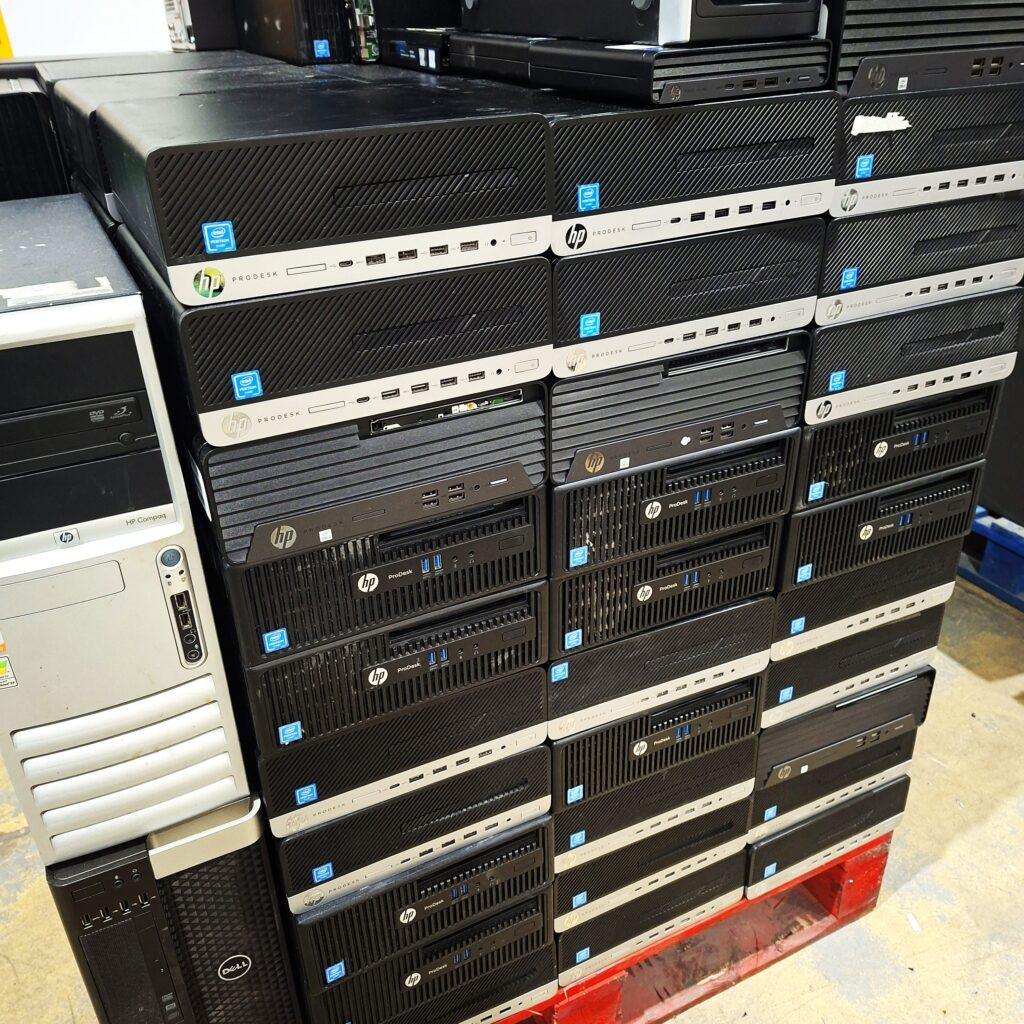
Once a device leaves daily use, it tends to follow one of a few familiar paths. It may sit in a storeroom for months or years without being tracked. It may be offered to a staff member as a spare. It may go out with a general waste or recycling collection, with no record of what happened to the data.
None of these paths is unusual. The issue is control. At each point, the organisation loses sight of where its data is and who can access it.
GDPR and NIS2: obligations to the end of the lifecycle
GDPR requires organisations to keep personal data secure for as long as they hold it. A laptop that has been switched off for the last time can still hold customer records, staff files or financial information. Until that data is erased or destroyed, the organisation is still responsible for it. GDPR also expects organisations to be able to show how personal data was handled, which means keeping a record of what happened to each retired device.
For organisations covered by the NIS2 Directive, asset management is one of the cybersecurity measures they must have in place. Knowing what equipment is held, and what happens to it when it is retired, is a basic part of that. NIS2 also makes these organisations responsible for security in their supply chain. As a result, their suppliers are increasingly being asked how they manage their own data and devices.
Erase, reuse or destroy
There are two reliable ways to deal with data on retired IT, and the right choice depends on the device.
- Certified data erasure overwrites the storage using specialist software, then verifies and records the result. Once the data is securely sanitised, the device can be reused, redeployed or resold. DGD carries out erasure using Blancco.
Read more in Certified Data Erasure Explained.
- Physical destruction is the right choice when storage media is damaged, cannot be verified as erased, or holds data too sensitive for reuse. DGD carries out secure destruction to EN 15713, the European standard for the secure destruction of confidential material.
Many organisations need both. The aim is a deliberate decision for each device, rather than a default.
A stronger cybersecurity posture from what you already own
Improving security is often associated with new spending. Managing retired IT works the other way. Once devices are securely sanitised, they can often be:
- Redeployed within the organisation, reducing the need for new equipment
- Resold, recovering value from hardware that would otherwise sit unused
- Removed from the organisation’s risk profile for good
Each retired device that is properly dealt with is one less source of risk, and in many cases a source of value. Our IT Asset Resale and Value Recovery service explains how that value is returned.
What a controlled end-of-life process looks like
A controlled process replaces uncertainty with a clear record at every stage:
- An inventory of retired assets, showing what is held, where it is and what data it is likely to contain.
- Secure collection with a documented chain of custody. Every DGD collection is made by our own vehicles and crews and is never subcontracted.
- Erasure or destruction to a recognised standard, with on-site hard drive shredding available for the most sensitive media.
- Certification for each device erased or destroyed, providing the evidence that accountability requires.
- Responsible handling of what remains, with reusable equipment returned to use and the rest recycled in line with WEEE requirements.
For practical steps, see How to Securely Dispose of Old Company Laptops.
Security that covers the whole lifecycle
Passwords, updates and phishing awareness protect the working life of IT. A controlled end-of-life process protects what comes after.
DGD Shredding & Technology helps organisations across Ireland manage retired IT securely, through certified data erasure, value recovery and secure destruction. Our work is supported by ISO 9001 and ISO 14001 certification.
Find out more about our IT Asset Disposition services
About DGD Technology
DGD Technology brings certified IT Asset Disposition, data erasure, and lifecycle management to businesses across Ireland, backed by the same standards of security, compliance, and accountability that have defined DGD Shredding since 1998. From certified erasure to secure destruction and asset resale, we help businesses retire IT equipment properly, whatever stage it has reached.
Want to see what our services can do for you?
Explore our ITAD & Lifecycle Solutions or find out more about our Shredding Services.
Find out how we can help your business? Talk to the team at sales@dgdtechnology.ie or call 1800 491 333.